
For builders
Specs, free plans and simulators for each size of trebuchet we build, from a desktop model to a machine at least 10 feet tall.
Specs, plans and simulators
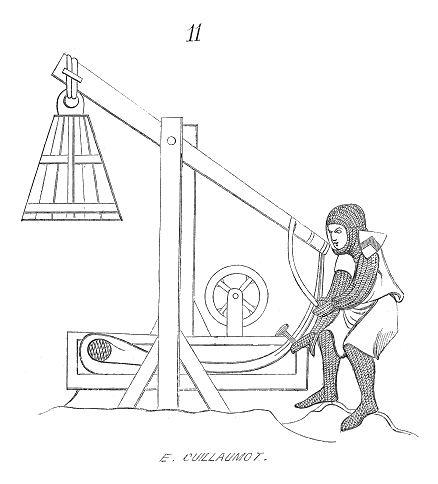
A medieval trebuchet
Trebuchet sketch by Villard de Honnecourt, about 1230
Public domain, via Wikimedia Commons

Each size below shows an example machine, its specifications, and links to free (or low-cost) building plans and 3D-printing files. The plans belong to their creators; we link to them for reference. Photos are freely licensed and credited.
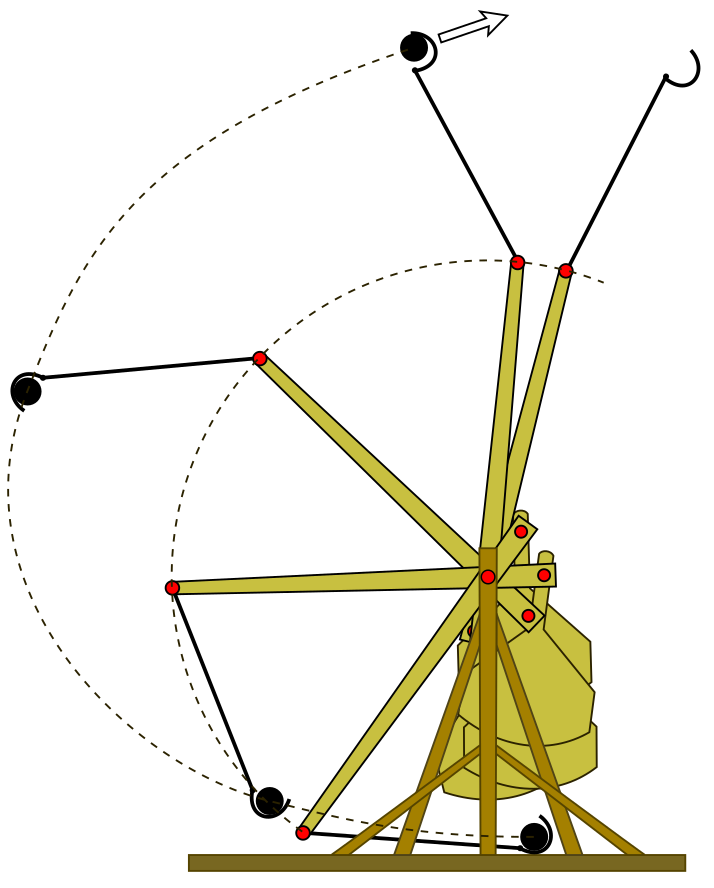
Diagram: Onno / Д.Ильин, CC0 (public domain), via Wikimedia Commons

1. Desktop Models (6–8 inches)
- Materials: 3D-printed PLA/PETG, wooden dowels, string
- Projectile: grapes, ping-pong balls, or small foam balls
- Range: 6–10 feet
- Assembly time: 30–45 minutes
- Cost per unit: $5–10 in materials
Build plans & 3D files
- Basic Miniature Desktop Trebuchet (3D-printed)
Instructables · ~8 in tall, PLA + a bearing and M3 screws; the closest match to our spec - Trebuchet by MlePh
Thingiverse · prints without supports; coins as counterweight; popular and well-tested - 3D Printed Trebuchet by taichl
Thingiverse · on a rotating stand so kids can aim - TryEngineering: Trebuchet Toss
Classroom lesson using everyday materials

Photo: brittgow, CC BY 2.0, via Wikimedia Commons

2. “Small Yard” Models (12–18 inches)
- Materials: laser-cut or hand-cut wood, hardware, string
- Projectile: apples, tennis balls
- Range: 15–30 feet
- Build time: 2–4 hours
- Cost per unit: $25–50
Build plans & 3D files
- Storm the Castle: Free Trebuchet Plan (“Little Dragon”)
Hand tools; 12 in base, 16 in arm; a couple of hours - Make a Desktop Trebuchet (laser-cut)
Instructables · 1/8 in MDF/plywood, PDF parts sheet; good for a makerspace laser cutter - Laser Cut Desktop Trebuchet with wheels (aabecker)
Thingiverse · 3/16 in plywood, SVG/PDF files; rolls on wheels - Scientific American: Build a Mini Trebuchet
Popsicle sticks and cardboard; no tools needed
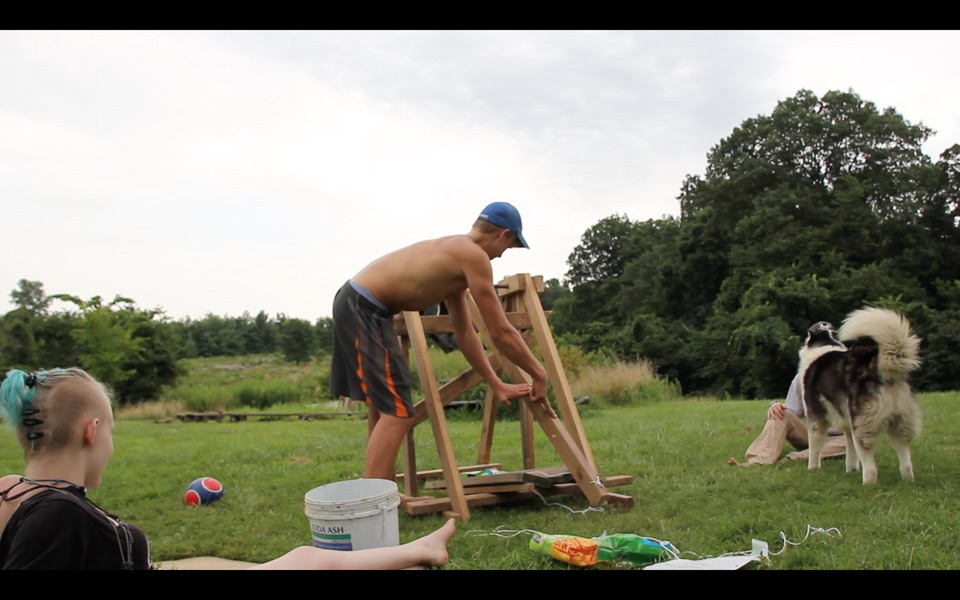
Photo: Nathan Kit Kennedy, CC0 (public domain), via Wikimedia Commons

3. “Big Yard” Models (3–4 feet)
- Materials: 2×4 lumber, plywood, hardware, rope
- Projectile: grapefruit, water balloons
- Splat Target idea (to test): biodegradable paintballs against a paper-covered target board. Paintballs may bounce at slower launch speeds, so this may only work at “Big Yard” (3–4 ft) and larger. Water balloons with washable paint work at any size. Safety glasses required
- Range: 30–75 feet
- Build time: 6–12 hours
- Cost per unit: $75–150
Build plans & 3D files
- DIY Backyard Trebuchet
Instructables · store-cut 2x4s, PVC arm, remote safety release; tennis balls - Trebuchet Build (on a wheeled base)
Instructables · 2×4 stands on a plywood base with wheels. Closest to our golf-course idea - Walking Arm Trebuchet (Make:)
41 in tall, very efficient design; $0–50 - TeachEngineering: Trebuchet Design & Build Challenge
Free class unit: 1.2 m height cap, tennis balls, $45 budget - RedStone Tennis Ball Trebuchet plans (paid, ~$13)
Professional drawings; hardware-store lumber
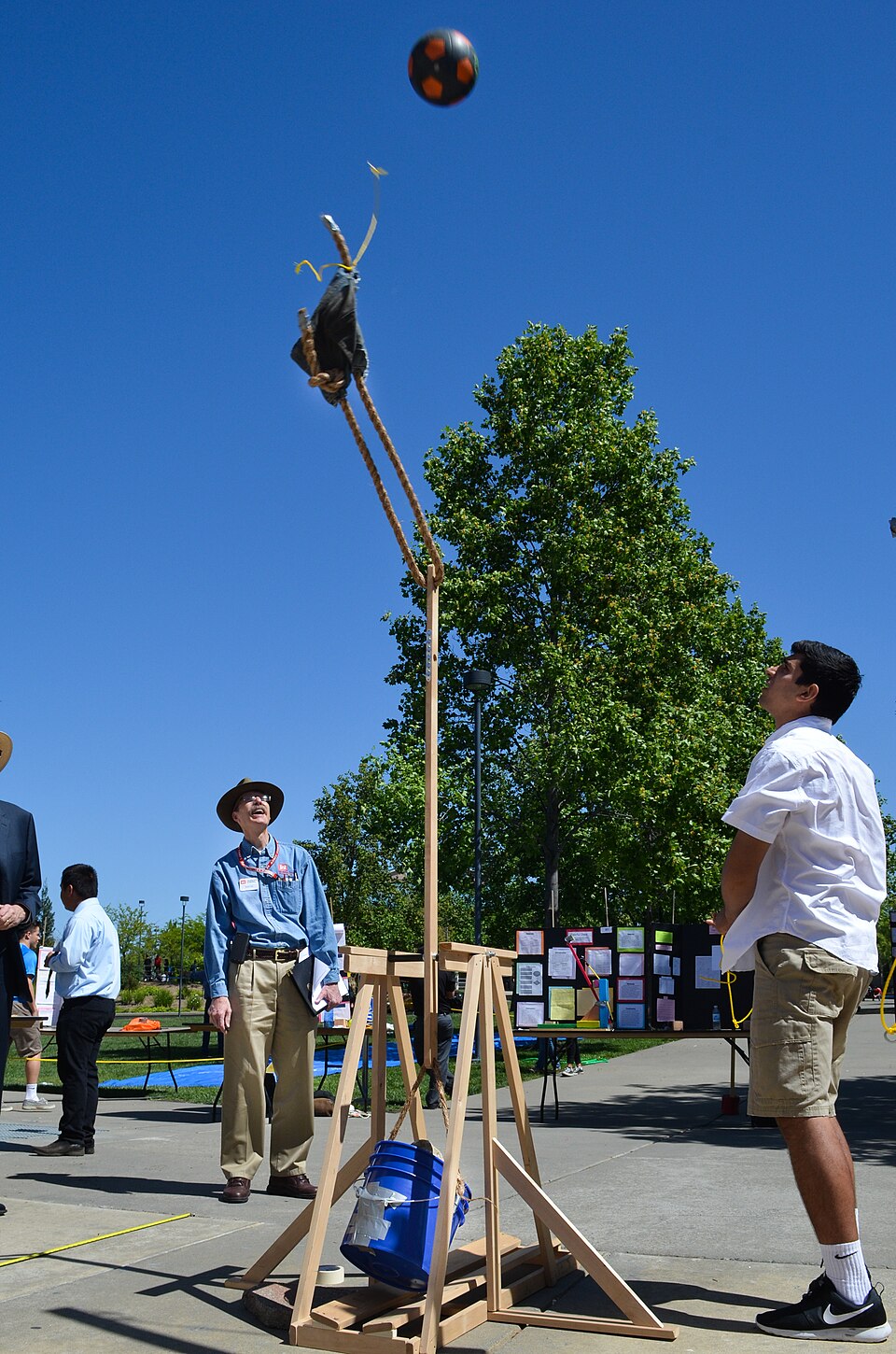
Photo: U.S. Army Corps of Engineers, Sacramento District, public domain, via Wikimedia Commons

4. 6-Foot Models
- Materials: heavy lumber, steel brackets, rope/cable
- Projectile: basketballs, small melons
- Range: 75–150 feet
- Build time: 3–5 days
- Cost per unit: $200–400 (plus a turf-tire wheeled base for the Golf Challenge)
Build plans & 3D files
- How to Build an Awesome Trebuchet
Instructables · 2×4 frame, 8 ft arm, full cut list - Floating Arm Trebuchet (F2K)
Instructables · Ron Toms’ efficient floating-arm design; a great physics talking point - Portable Pumpkin Catapult
Instructables · folds for transport; concrete-bag counterweight
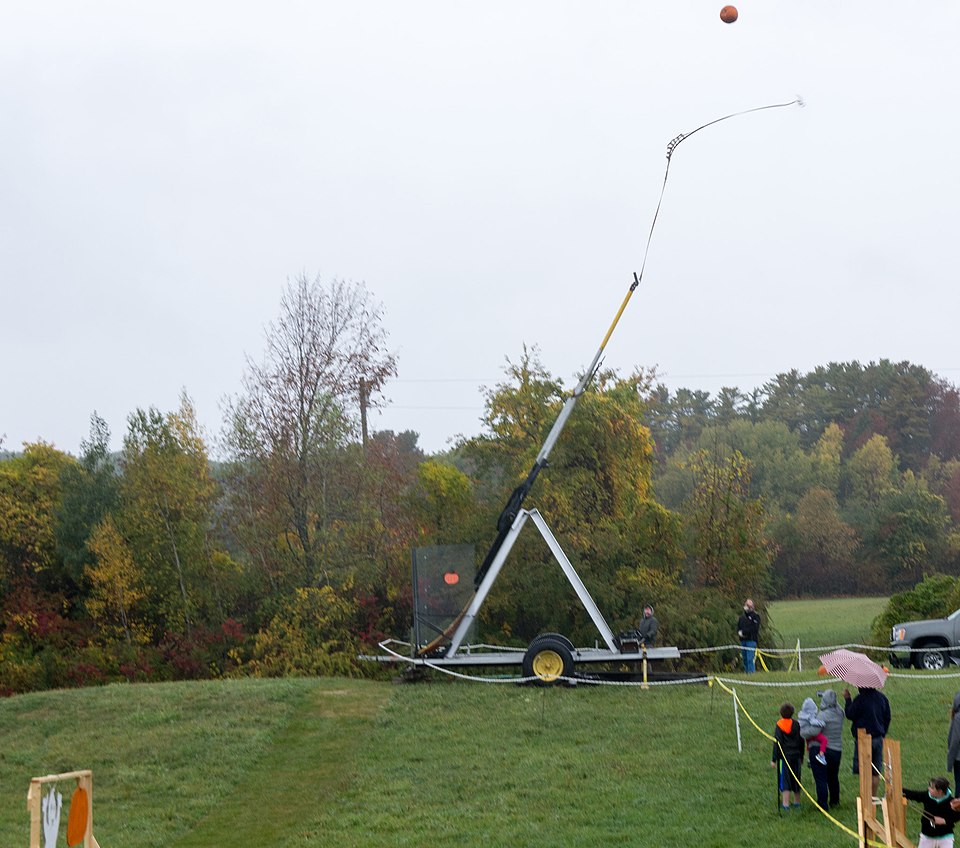
Photo: Matthew Bellemare, CC BY-SA 3.0, via Wikimedia Commons

5. 10+ Foot Machine (our 2027 goal)
- Materials: heavy timber, steel hardware, concrete counterweight
- Projectile: small pumpkins (2–8 lb)
- Range: 150–300 feet
- Build time: 1–2 weeks
- Cost per unit: $500–1,000
Build plans & 3D files
- Trebuchet Fun
Hobbyist site (Fort Wayne, IN) · build how-to, videos, and specs for their 14 ft machine: 300 lb counterweight, 8 ft arm, 5 ft axle height, 3 ft sling, 2 lb projectiles - Building a Giant Trebuchet (trailer-mounted)
Instructables · welded steel on a trailer axle with a winch; the closest free build log at this scale - The Big Book of Catapult and Trebuchet Plans (Ron L. Toms)
Book · nine designs by the floating-arm inventor - Virtual Trebuchet (simulator)
Tune arm, sling, and counterweight before cutting anything
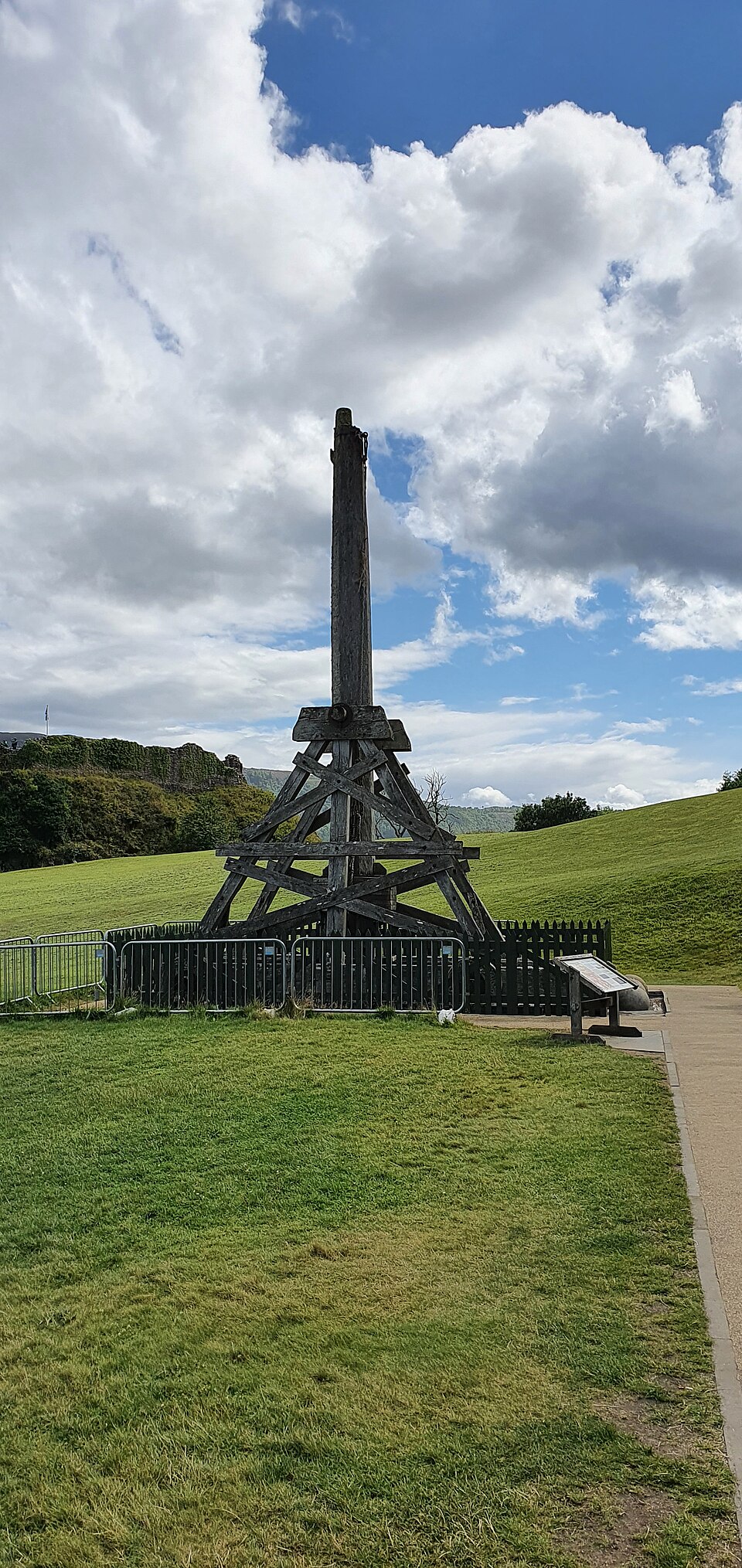
Photo: Yair Haklai, CC BY-SA 4.0, via Wikimedia Commons

Someday: a Full-Scale Trebuchet (15–20 feet)
- Materials: heavy timber, steel hardware, concrete counterweight
- Projectile: larger pumpkins
- Range: 200–400 feet (someday)
- Build time: multiple weekends with a team
Build plans & 3D files
- NOVA: Building a Full-Size Trebuchet
How NOVA’s team built the Urquhart Castle machine - Hastings Greer Trebuchet Simulator
A second simulator for checking a design - Storm the Castle: trebuchet articles and plans
Background reading and plan index
There are no free, engineered plans at this size. Competition teams design their own. We’ll treat this as a design project using the simulators, and have an engineer review the build before any public launch.
Design tools for every size: Virtual Trebuchet and the Hastings Greer Trebuchet Simulator let you try arm lengths, sling lengths, and counterweights on screen before building.